
The Rural Initiative
Advanced life support shouldn't depend on which county you collapse in.
Enter your ZIP code to see whether your program qualifies.
Source: HRSA Federal Office of Rural Health Policy, ZIP Code Approximation file (June 2024). Foresight is not affiliated with or endorsed by HRSA or any federal agency.
Why rural
Built for the program where one instructor writes every exam.
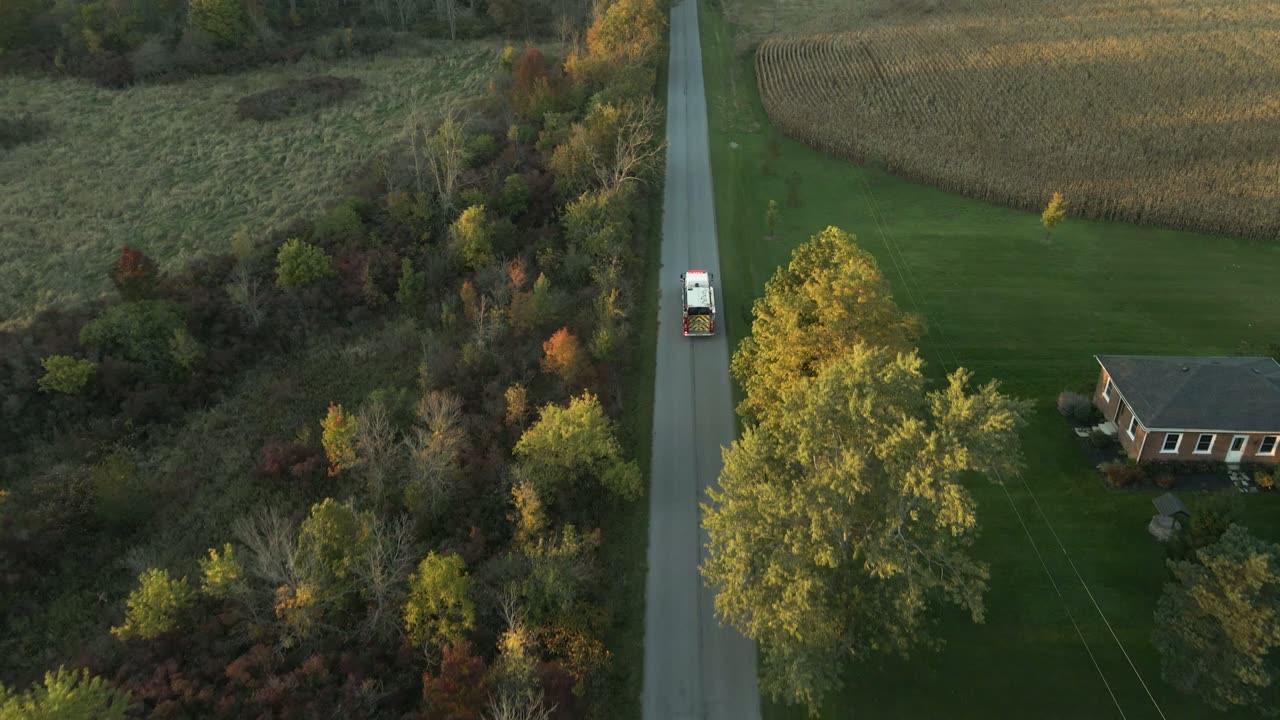
Across much of the country, the ambulance that shows up is staffed by volunteers, runs at the BLS level, and is a long way from the nearest cath lab or trauma center. The interventions that change an outcome in the first hour are the ones least likely to be on that truck.
That gap does not close with software. It closes with paramedics — and the programs that train them are rarely the ones with an assessment office. More often it is one instructor teaching every block, running clinicals between shifts, and writing every exam after the students go home.
We can't shorten a transport time. What we can do is make sure that program isn't the one priced out of assessing its students properly — because assessment is how an instructor finds out what a student cannot do yet, while there is still time to fix it.
So the programs serving those areas pay less. Same platform, no stripped tier. We use HRSA's Federal Office of Rural Health Policy definition to decide who counts, because it is the same standard that governs federal rural health funding and your program can verify it without taking our word for anything.
The ZIP list is HRSA's own approximation of a determination made per census tract, so a ZIP straddling a boundary gets one answer for ground that is genuinely mixed. If the check says no and you believe you are rural, run your address through the Am I Rural? tool and send us the FORHP line. Foresight is not affiliated with, endorsed by, or sponsored by HRSA, the Rural Health Information Hub, or any federal agency.
Why we do this
It isn't charity. It's where the tool fits best.
A program with a full assessment office and a five-figure vendor contract has options. A program where one paramedic instructor writes every exam does not — and that is exactly the person this was built by and for.
One instructor, every job
Rural programs rarely have a dedicated assessment coordinator. The person writing the exam is the person teaching the block, running clinicals and answering the phone.
Per-seat pricing assumes scale
A cohort of twelve pays the same per-student rate as a cohort of ninety, and the vendors quoting those rates are not built for the twelve.
The same review, less to review with
Accreditation asks a rural program for the same outcome evidence it asks a large one. Smaller programs get there by hand, on a Sunday.
What comes with it
It isn't only a lower rate.
A discount by itself doesn't help much if nobody has ever shown you what a good item looks like, or which of these numbers is worth your Sunday. So the rate comes with a working session when you start, not just a login.
A working session on your items
When you set up, we go through a set of your own items together — stems, keys, distractors. The ordinary flaws that cost a good student marks, and the ones that make a bad item look like a hard one.
Measuring the right things
Most programs track a score and little else. In the same session we settle what is actually worth watching — which domains, which clinical-judgment steps, which items are earning their place.
Set up properly, once
Cohorts, levels and a first bank built with you rather than handed over as a login. Whatever you build stays yours.
To be clear about what this is: a working session at setup, on your own assessments. Not an ongoing exam-review service, not accreditation consulting, and we don't validate or certify anyone's exam.
Tell us where you teach.
Check your ZIP at the top of this page, or just tell us the town. We'll come back with the rate and a walkthrough either way.
Talk to us